
Supreme Court stay lets border-barrier work resume in the Big Bend region — pending appeal
In Mullin v. Friends of the Ruidosa Church (26A560), the Court stayed an El Paso injunction so construction can resume while the government seeks certiorari. This is not a final ruling on the merits. Justice Jackson would have denied the stay.
Published
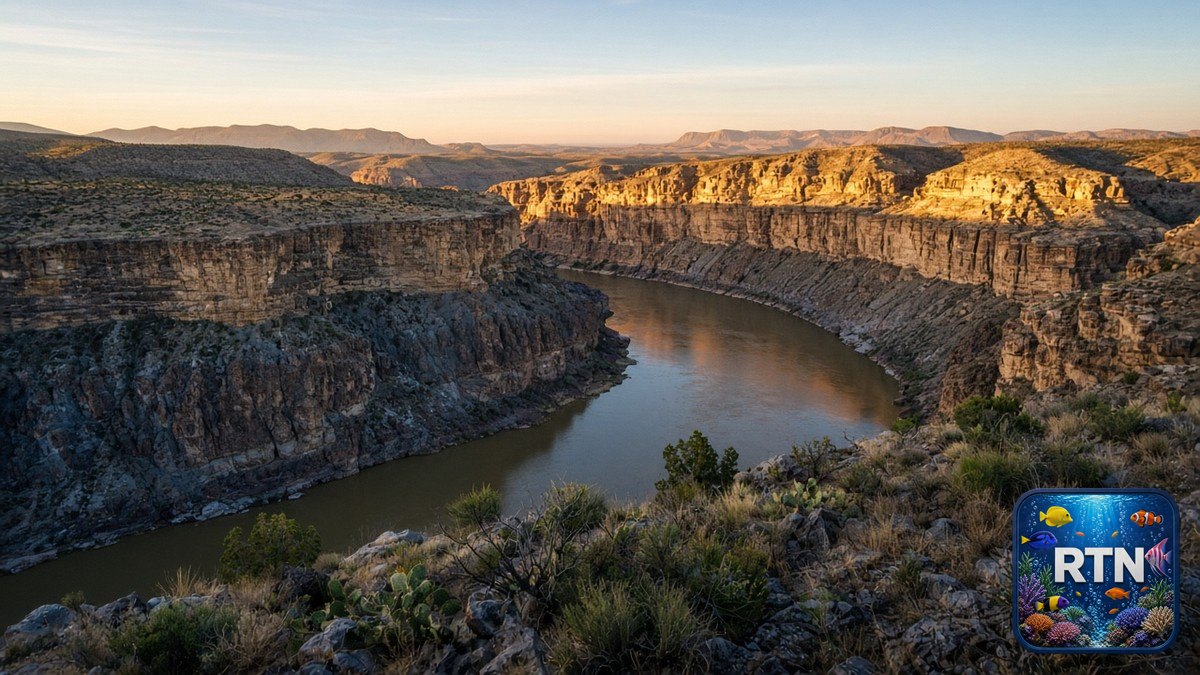
The U.S. Supreme Court on Monday granted the Trump administration a stay that lifts a federal injunction and allows border-barrier construction to resume in the Big Bend region of southwestern Texas while the case continues. The unsigned per curiam order in Mullin v. Friends of the Ruidosa Church, No. 26A560, is a stay pending a petition for certiorari — not a final ruling on whether the project is lawful on the merits.
Justice Ketanji Brown Jackson would have denied the stay. The order records that position and contains no further explanation of her dissent.
What the Court did — and did not do
On 2 October 2026, the U.S. District Court for the Western District of Texas entered a preliminary injunction blocking waivers issued by the Secretary of Homeland Security and halting associated construction. NPR reports that the injunction was issued by a federal judge in El Paso; SCOTUSblog identifies the judge as Kathleen Cardone. The administration asked the Supreme Court either to reverse that injunction summarily or to stay it. SCOTUSblog reports that the justices refused summary reversal and granted the stay instead.
Under the order, the injunction is stayed pending the filing and disposition of the government’s petition for a writ of certiorari, if the petition is timely sought. If certiorari is denied, the stay “shall terminate automatically.” If certiorari is granted, the stay lasts until the Court’s judgment is sent down. The underlying lawsuit therefore continues. The Court did not decide the merits of the major-questions argument and did not issue a permanent authorization for construction.
The Court’s opinion locates the project in a region U.S. Customs and Border Protection has designated the “Big Bend Sector.” NPR describes planned construction of hundreds of miles of border barrier and security infrastructure in west Texas, including 30-foot-tall steel barriers, patrol roads and surveillance systems, along a nearly 500-mile stretch of the border.
Why the majority said the government is “exceedingly likely to prevail”
The dispute turns on jurisdiction under Section 102 of the Illegal Immigration Reform and Immigrant Responsibility Act of 1996. That provision, the Court recounted, authorizes the Secretary to construct border barriers and roads and to “waive all legal requirements” as necessary to ensure expeditious construction, while limiting judicial review: a claim “may only be brought alleging a violation of the Constitution of the United States,” and courts “shall not have jurisdiction” over nonconstitutional claims.
Respondents — a river guide, an environmental nonprofit, and a group dedicated to preserving a historic church in Ruidosa, Texas — had challenged the waivers in part as a “major questions doctrine” claim under the Constitution. The district court treated that claim as constitutional and found it likely to succeed. The Supreme Court disagreed on the jurisdictional point. “However it is labeled,” the per curiam opinion says, the claim does not allege a constitutional violation; it alleges that the Secretary exceeded statutory authority. “There is no such thing as a ‘constitutional’ major-questions claim.”
The Court also found that the remaining stay factors favored the government, including a Customs and Border Protection declaration that the injunction was causing nearly half a million dollars in costs per day that “cannot be recouped” if the government later prevails, and Congress’s “clear preference for expeditious border construction” in the waiver statute.
Production disclosure: AI-written for RealTeaNews house style; human-edited by @tonyscakes8g. Not legal advice.
Sources
- Mullin v. Friends of the Ruidosa Church, 26A560, per curiam stay order, Supreme Court of the United States. Accessed 10 November 2026.
- Docket for 26A560, Supreme Court of the United States. Accessed 10 November 2026.
- Supreme Court allows Trump administration to continue border wall construction, SCOTUSblog. Accessed 10 November 2026.
- Supreme Court says border wall construction can continue in West Texas, NPR. Accessed 10 November 2026.
Sources link to external sites. Their content is the responsibility of their publishers.