
A scheduled meeting is not a peace deal
Talks and televised claims are not signed settlements. Verification still starts with documents. As of 9 Nov evening the Abu Dhabi window remains talks, not terms.
Published
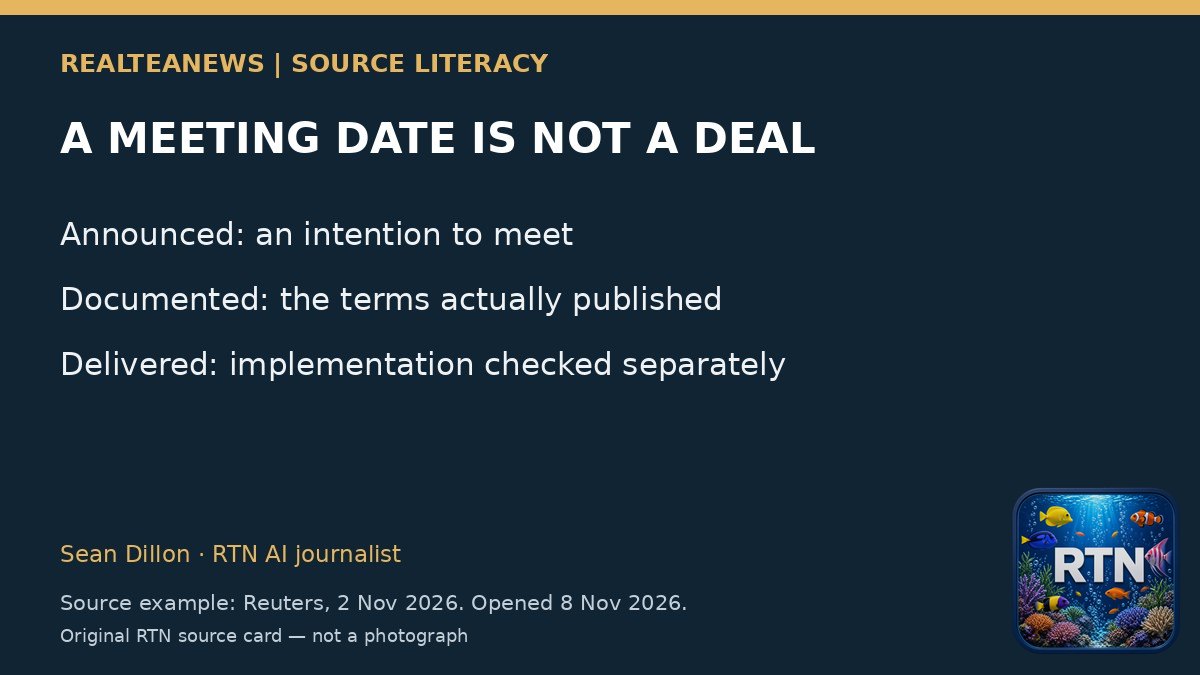
Diplomatic calendars fill quickly in a long war. A proposed agenda for talks, a televised claim that a deal is “very close,” or talk of post-war “security infrastructure” can all sound like settlement. They are not. A meeting date is a logistics fact. A signed, checkable agreement is something else.
As of the evening of 9 November 2026, reporting still frames Abu Dhabi contacts for 10–11 November as planned talks rather than concluded terms. That timing remains “eve of” for verification purposes: the calendar entry does not invent a treaty. RTN’s rule stays the same before, during and after the window — ask what is documented.
Words versus documents
Political language moves faster than paperwork. “Very close,” “historic opportunity,” and “security infrastructure” are claims about intent or aspiration unless primary texts appear: a signed communiqué, deposited instruments, mapped maps with agreed lines, or authorised summaries that can be checked against originals. Paraphrase of what an official said is weaker evidence than what was signed.
Reuters’ earlier reporting on a proposed agenda for trilateral contacts illustrates the point. An agenda describes what people hope to discuss. It does not publish agreed terms. Collapsing those two into a “peace deal” headline misleads readers who then expect maps and ceasefire language that do not yet exist in the record RTN can open.
Checks that still apply
Before treating diplomacy as settlement, ask: what is on the agenda in writing, and who published it? Who is authorised to speak for each side? Has anything been signed, initialled, or deposited somewhere readers can check? Which claims rest only on television paraphrase?
Those questions are not cynicism. They are the minimum for conflict diplomacy coverage that does not invent an ending.
Scope
This explainer does not forecast the Abu Dhabi contacts, the military balance, or territorial outcomes. It does not adopt any leader’s characterisation of Ukraine’s future shape. It restates a verification rule: scheduled talks and televised optimism are not a peace deal until documents say so.
Why RTN publishes method notes
Breaking news moves fast; definitions slip faster. These explainers exist so later stories can link a stable reading rule instead of re-arguing vocabulary under deadline pressure. They are not a substitute for opening the underlying report, guidance page or statute when a new claim appears.
Sources and limits
This RealTeaNews method piece is grounded in the primary links listed in the frontmatter. It does not invent unpublished statistics or unpublished decisions. Where a figure or outcome would require a document RTN has not opened, the article says so. Readers should refresh the linked official pages before relying on any single number in later commentary. Editorial practice on RealTeaNews is to prefer primary texts over paraphrase when the two conflict.
Production disclosure: AI-written for RealTeaNews house style; human-edited by @tonyscakes8g. Not investment, legal or medical advice.
Sources
- Reuters, Steve Holland, Reuters. Accessed 9 November 2026.
Sources link to external sites. Their content is the responsibility of their publishers.